

 Germany (€)


Thesis HV venti
Technical Highlights
- 2-channel amplifier, 1600W RMS, dual mono design.
- Class A preamplifier, MOSFET-BJT hybrid, 90V supply.
- Symmetrical input circuit, 100 dB SNR, 0.05% THD.
- More technical details
 Pay conveniently in 12 interest-free installments at €870,75 with Klarna .

Availability for pickups could not be loaded.
Shipping cost calculator
Shipping cost calculator

Rob

Max
Unsure if this product fits your car?
We help you – quickly, personally, and without obligation.
Fill out the form and we'll send you a personalised offer
This product is not universally compatible. Send us your vehicle details and we will check fitment for your model free of charge.
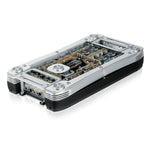
Thesis HV venti by Audison
Thesis HV venti is a 2-Channel Amplifier from Audison with dual-mono construction and four synchro-PWM power supplies. The MOSFET-BJT hybrid configuration uses discrete IGBTs, two Hitachi DMOS, and two pairs of complementary Sanken Power BJTs, each designed for 30 A peak current and 200 W power loss. The Class A preamplifier and driver is symmetrically built up to the driver outputs, with 90 V supply for the front-end stage and two separate channels. A separate 150 V power supply is thermally stabilized and biased in Class A. The symmetrical input combines a complementary JFET differential and a complementary BJT differential; the voltage amplifier is implemented as a cascode with a buffer. The output power is 400 W x 2 at 4 Ohm, 800 W x 2 at 2 Ohm, and 900 W x 1 at 4 Ohm at 14.4 VDC and 1% THD, with a total RMS power of 1600 W. The bandwidth is 4 Hz to 75 kHz, the S/N ratio is 100 dB, and the damping factor is 80. Additional features include fully relay-switched signal routing, exclusively discrete components, Dual Power and Bias Selector functions, Hi and Low Level inputs, and a 5 mm aluminum housing with two side cooling channels.
- 2-Channel Amplifier
- Dual-mono construction with four synchro-PWM power supplies
- MOSFET-BJT hybrid configuration with discrete IGBTs; two Hitachi DMOS drive two pairs of complementary Sanken Power BJTs (each 30 A peak current, 200 W power loss)
- Class A preamplifier and driver, symmetrically built up to the driver outputs
- Fully symmetrical input circuit with complementary JFET differential (first stage) and complementary BJT differential (second stage)
- Voltage amplifier as a cascode with buffer to drive the output stage
- Separate power supply: 90 V for front-end and channels; separate 150 V power supply, thermally stabilized and biased in Class A
- Manufactured exclusively with discrete components; signal routing exclusively via relays
- Power supply on a separate board
- Dual Power function to switch between Hi-Current and Hi-Power
- Bias Selector to change the Class A percentage
- Hi Level Input and Low Level Input
- High-quality Crossover module included
- 5 mm aluminum housing with two side cooling channels
- Channels: 2
- Amplifier Class: A-Class
- Hi Level Input: Yes
- Low Level Input: Yes
- Digital Input: No
- Supply Voltage: 11–16 VDC
- Idle Current: 4.2 A
- Idle Current when Off: 0.006 mA
- Power Consumption at 14.4 VDC, 2 Ohm, maximum music power: 90 A
- Remote IN: 7–16 VDC, 1 mA
- Distortion (THD) @ 100 Hz, 4 Ohm, 70% rated power: < 0.05 %
- Bandwidth (-3 dB, 2 VRMS, 4 Ohm): 4 Hz – 75 kHz
- Signal-to-Noise Ratio (A-weighted @ 1 V): 100 dB
- Damping Factor (1 kHz, 4 Ohm): 80
- Input Sensitivity (Pre-In high): 0.25 – 1.6 VRMS
- Input Sensitivity (Pre-In low): 1 – 7 VRMS
- Total RMS Power: 1600 W
- Output Power (RMS) @ 14.4 VDC, 1% THD, 2 channels at 4 Ohm: 400 W x 2
- Output Power (RMS) @ 14.4 VDC, 1% THD, 2 channels at 2 Ohm: 800 W x 2
- Output Power (RMS) @ 14.4 VDC, 1% THD, 1 channel at 4 Ohm: 900 W x 1
- Adjustable Crossover: No
- Input Type: Pre IN L/R (ABS)
- Outputs: Pre OUT (pre in bypass) L/R (ABS)
- Filter Pass A: High-pass & Low-pass stereo 45 / 55 / 65 / 80 Hz, 12 dB/Oct.
- Filter Pass B: Low-pass mono 45 / 55 / 65 / 80 Hz, 24 dB/Oct.
- Fuse: 100 A
- Other Functions: Demo mode ext. supply: 12 VDC, 600 mA; Ext. Cap terminals: 18 VDC cap min
- Weight: 15 kg
- Dimension A: 510 mm
- Dimension B: 85 mm
- Dimension C: 280 mm
Your benefits at Masori




Audison Thesis HV venti Datasheet
Open datasheetFrequently Asked Questions about Thesis HV venti
How does the dual-mono construction work in the Thesis HV venti Amplifier?
How does the dual-mono construction work in the Thesis HV venti Amplifier?
What power ratings does the Thesis HV venti provide at 2 Ohm and 4 Ohm?
What power ratings does the Thesis HV venti provide at 2 Ohm and 4 Ohm?
What features does the preamplifier of the Thesis HV venti offer?
What features does the preamplifier of the Thesis HV venti offer?
What input options does the Audison Thesis HV venti offer?
What input options does the Audison Thesis HV venti offer?
How does the HV venti ensure a low distortion rate at high power?
How does the HV venti ensure a low distortion rate at high power?
What role does the MOSFET-BJT hybrid configuration play in the Thesis HV venti?
What role does the MOSFET-BJT hybrid configuration play in the Thesis HV venti?
What crossover functions does the Audison Thesis HV venti offer?
What crossover functions does the Audison Thesis HV venti offer?
How does the Thesis HV venti optimize sound quality with its symmetrical circuit?
How does the Thesis HV venti optimize sound quality with its symmetrical circuit?
What are the dimensions of the Thesis HV venti and what should be considered during installation?
What are the dimensions of the Thesis HV venti and what should be considered during installation?
How do the Synchro-PWM power supplies affect the performance of the Thesis HV venti?
How do the Synchro-PWM power supplies affect the performance of the Thesis HV venti?
Manufacturer information / responsible person
Manufacturer information / responsible person
Let customers speak for us
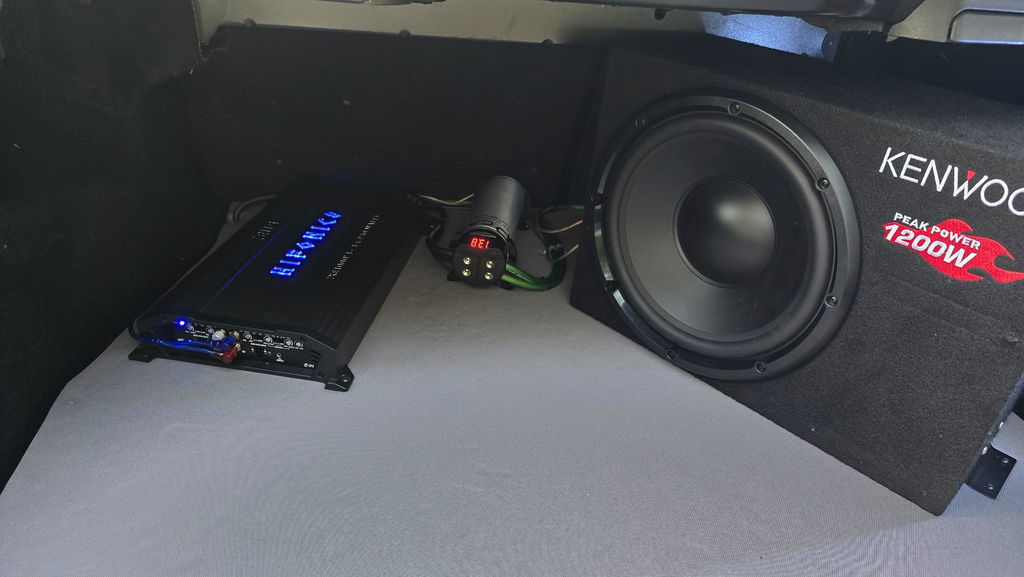
Alles top!
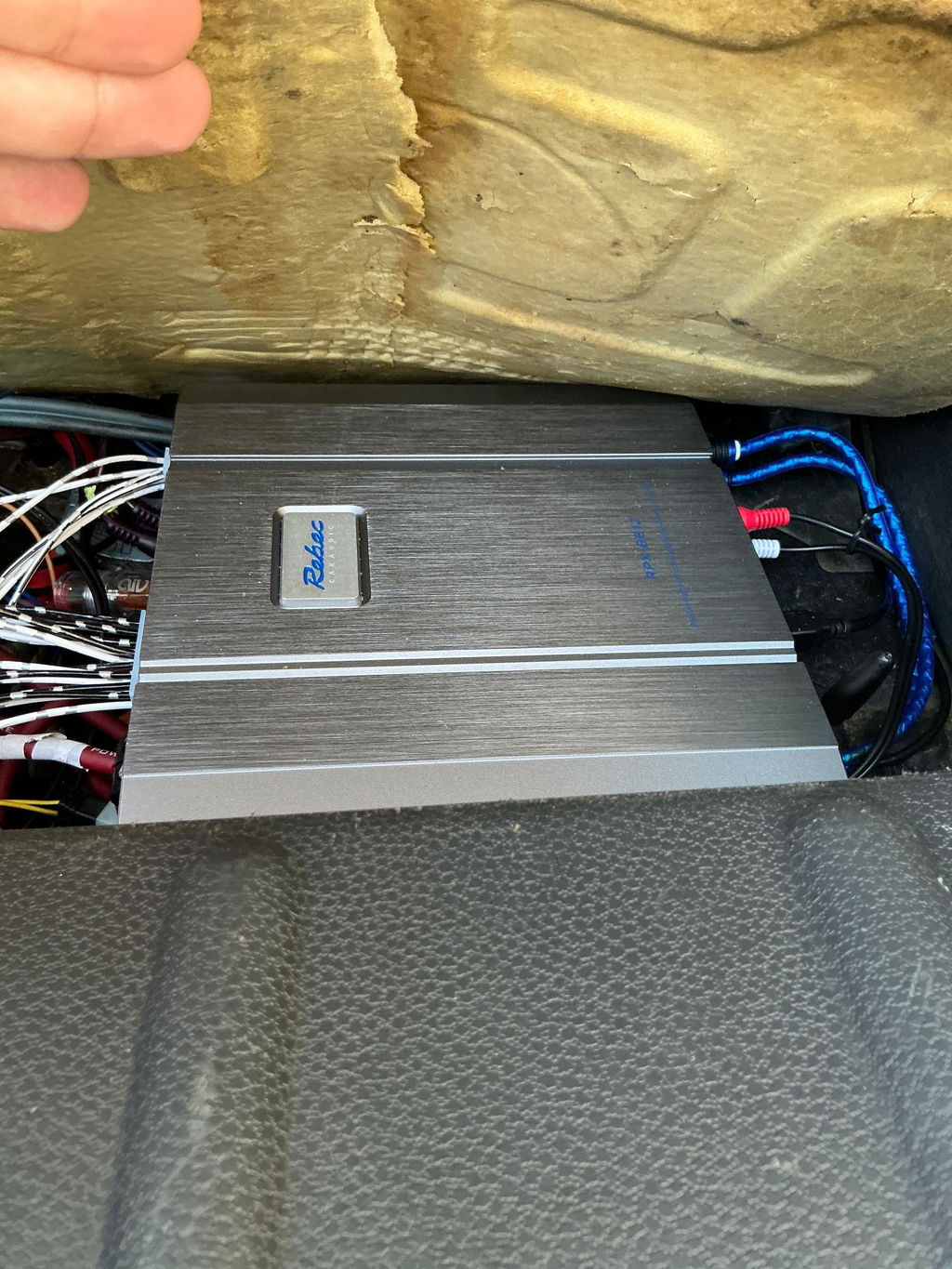
Preisleistung ist sehr gut
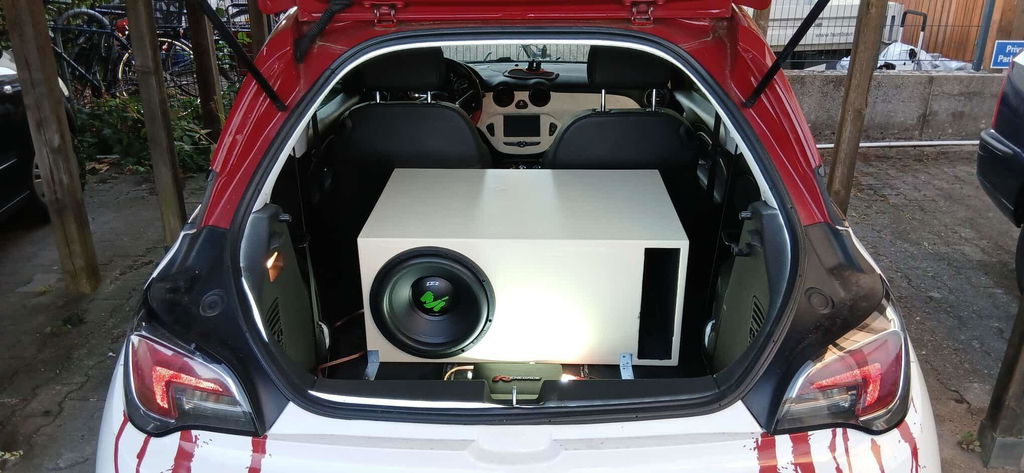
Preis/Leistung einfach extrem gut! Was man für knappe 100€ an Sub bekommt ist schon sehr vernünftig. Ich habe ihn über einen RECOIL RED1200 laufen lassen über 2ohm und der Feuert schon ziemlich gut. Ist in einem Adam S verbaut und einer reicht eigentlich schon aus. kommt natürlich mehr^^
Versand etc war alles Top, schnell und zuverlässig. Zahlung und Auftrag schnell bearbeitet!
Masori wird für mich meine erste (als Neuling) Anlaufstelle bei Neuteilen.
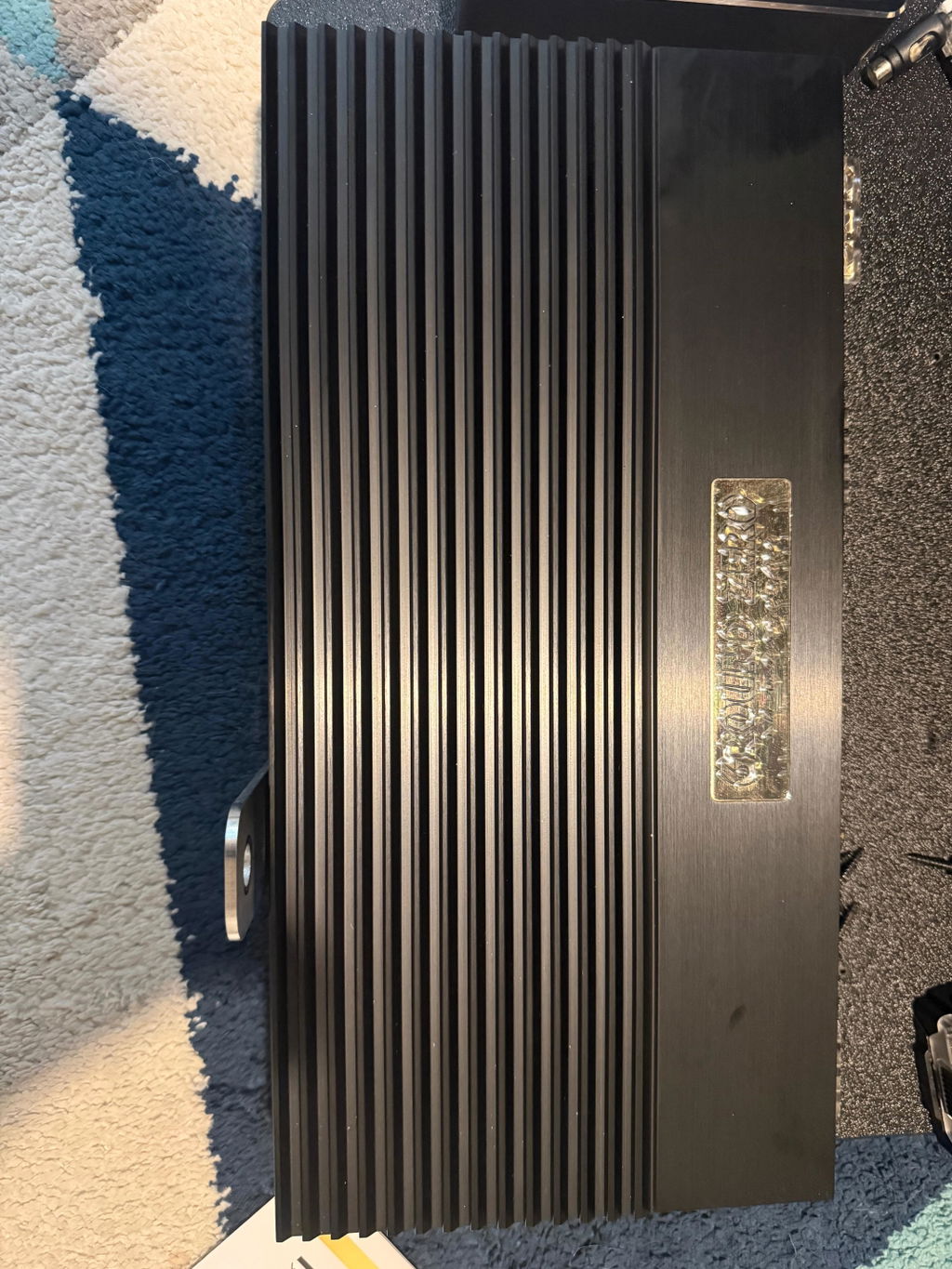
This amplifier is beautiful and well made, I can’t wait to hook it up and hear the sound! Matter of fact I’m about to order another one!
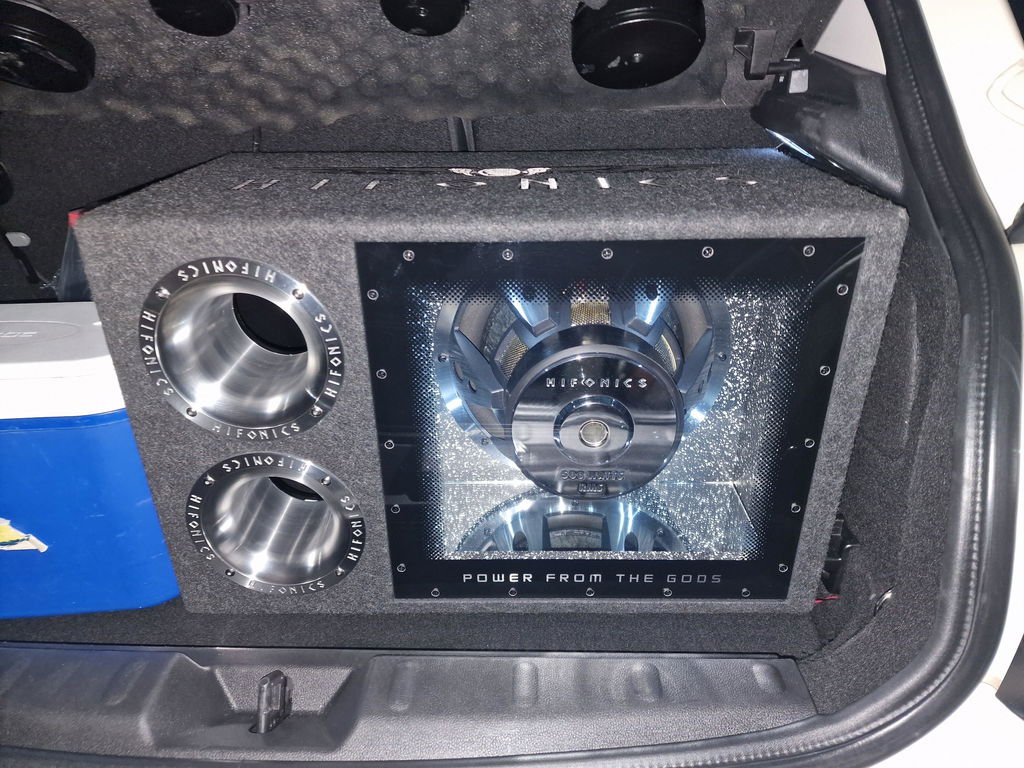
Muy buen producto, es un sonido con bajos fuertes sin perder dalidad.
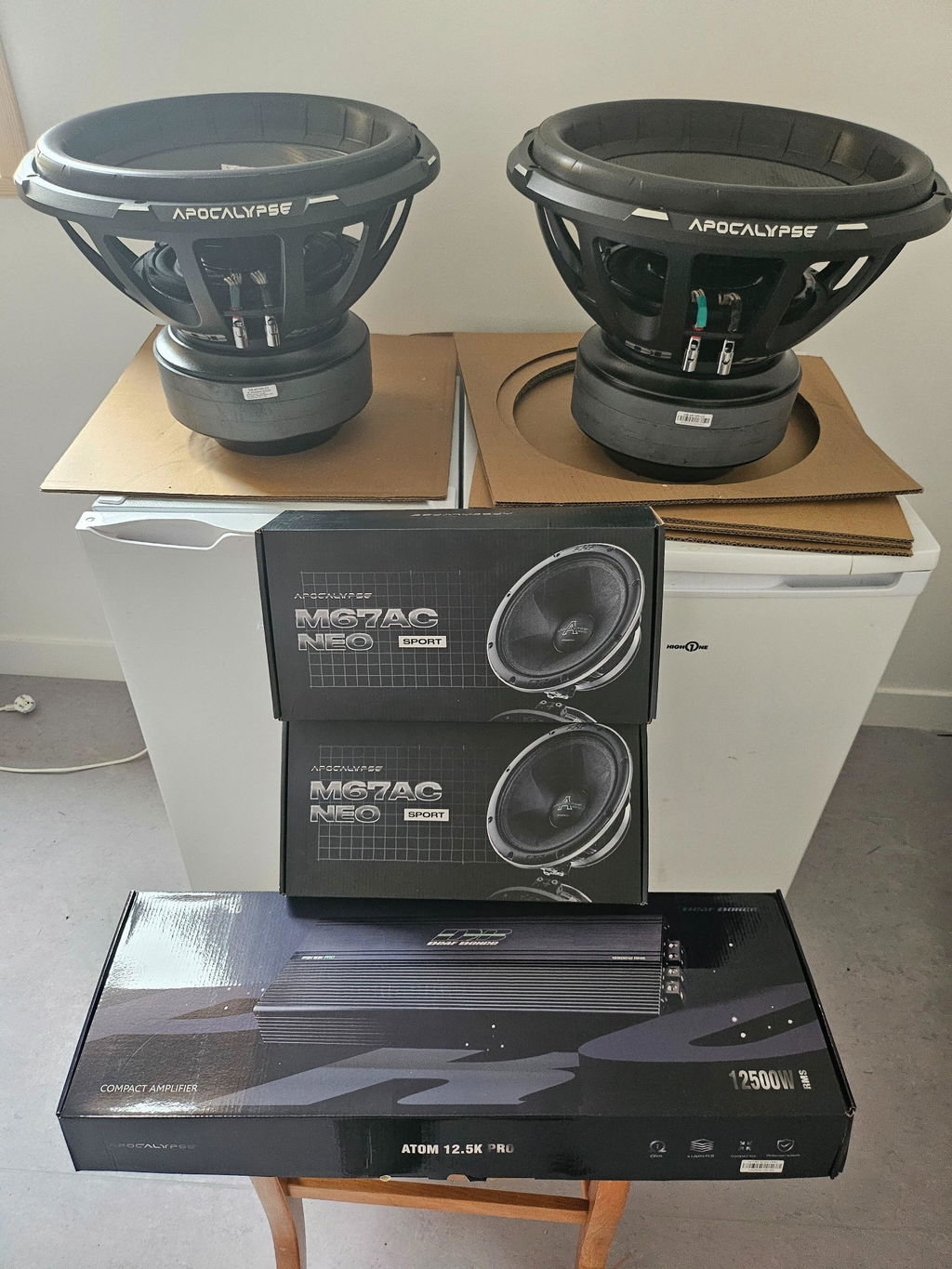
👍👍👍
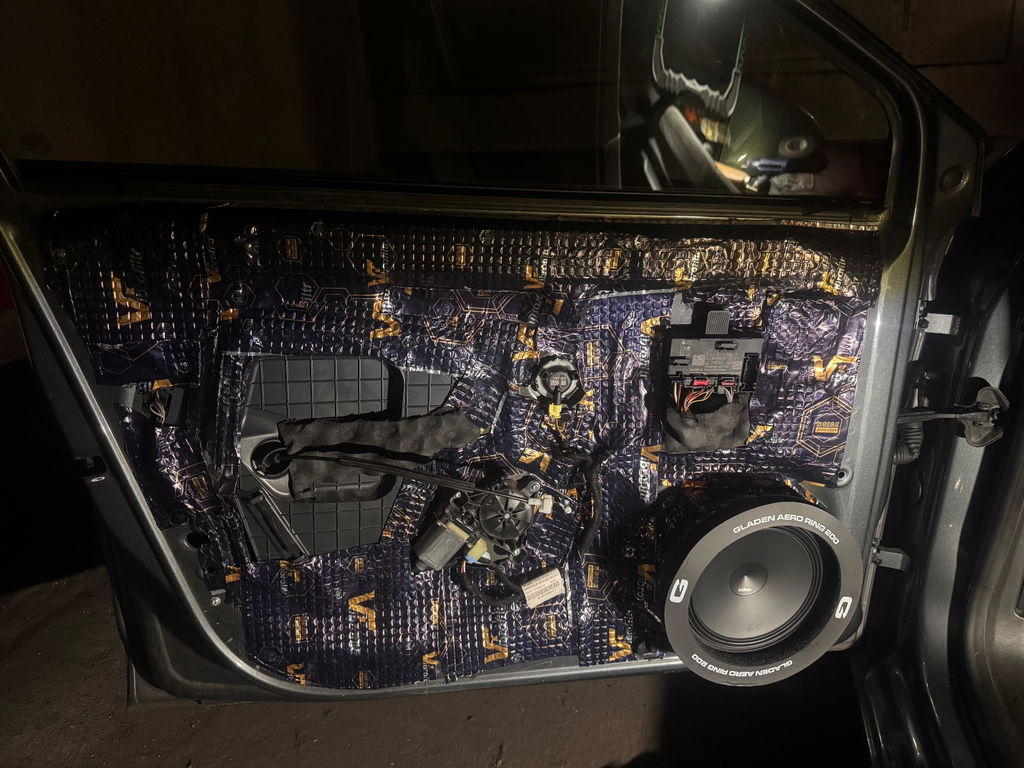
Se nota mucho el cambio de unos ciare cm161. El grave se nota mucho mas bajo y enlaza perfectamente con el subwoofer. Bueno el salto de 6’5 a 8”. Buena compra, recién instalado y ecualizado. Falta ver que tal con el tiempo.
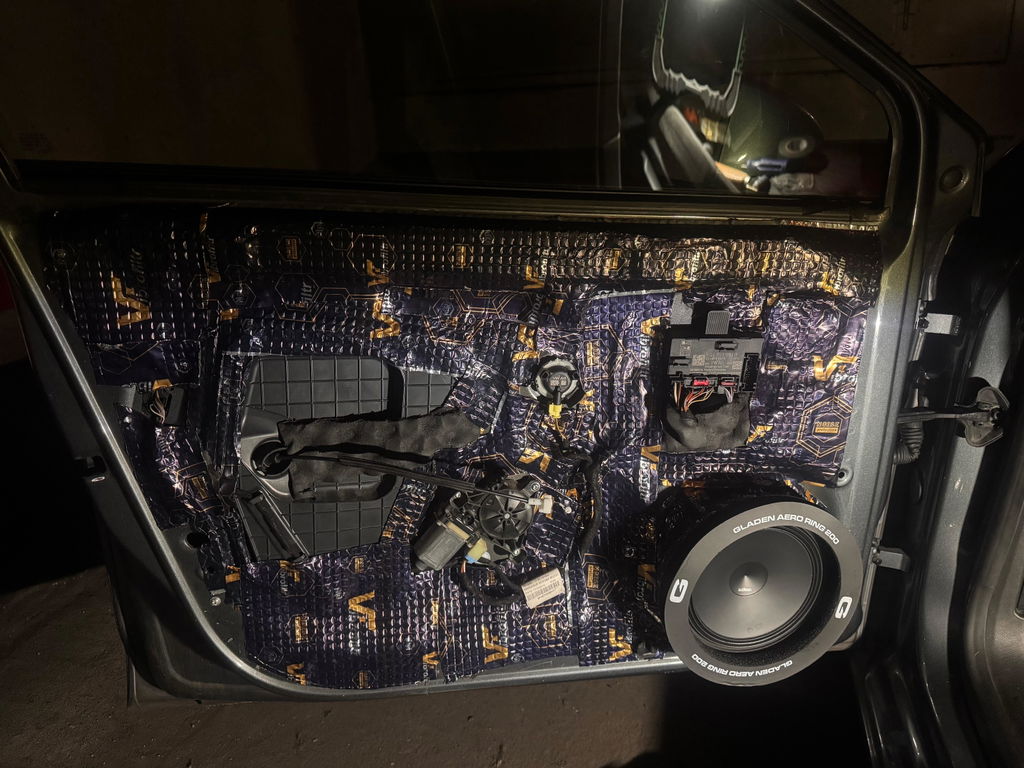
Bien esteticamente quedan muy bien y encajan y pegan perfectamente en 8”.
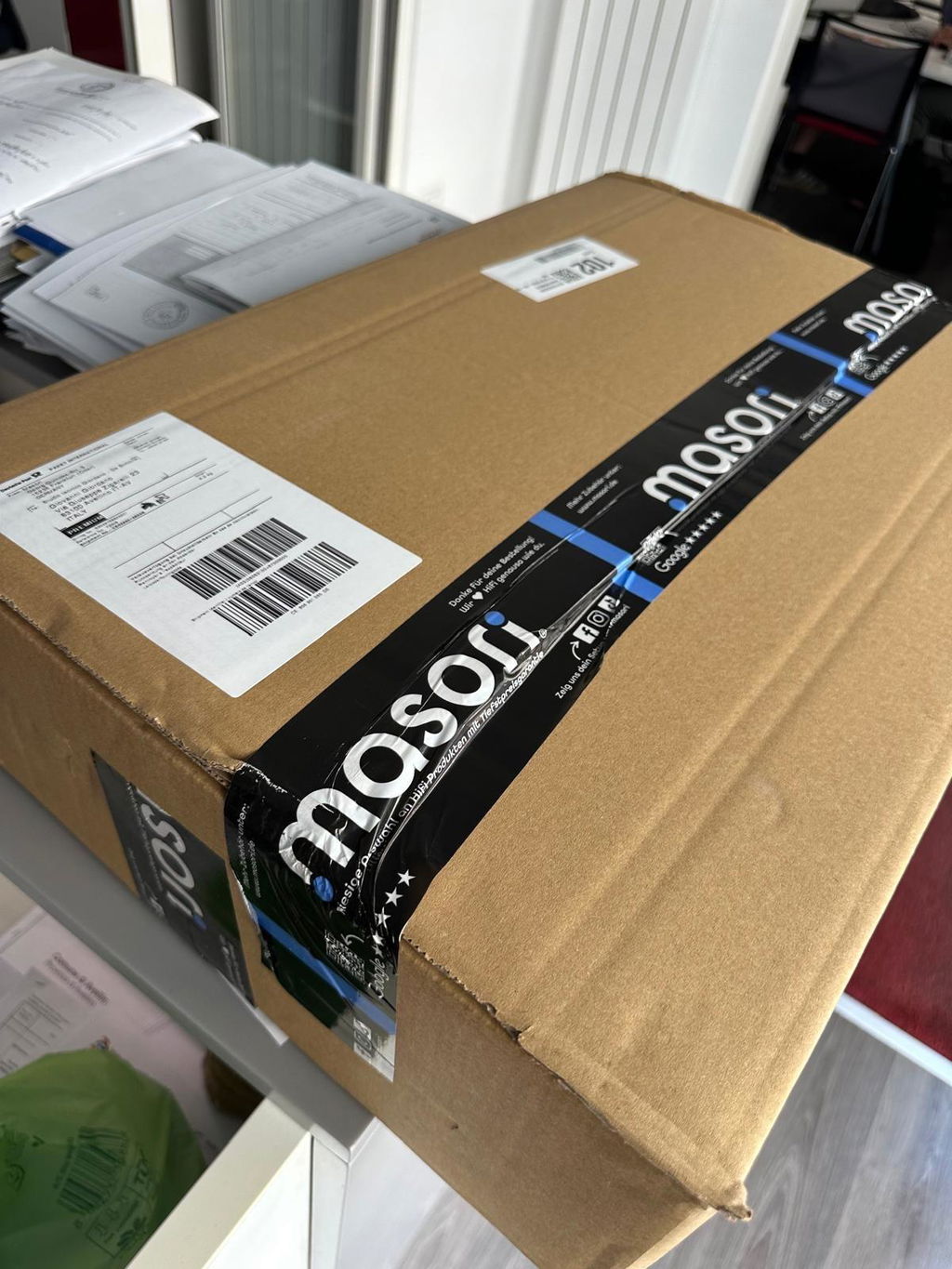
Ein wirklich außergewöhnlicher Service\! Ich habe meine Bestellung am 15\. August aufgegeben – zu einer Zeit, in der viele Unternehmen wegen der Sommerferien nur eingeschränkt arbeiten oder geschlossen sind\. Bereits vier Tage später war das Produkt bei mir in Italien angekommen\.
Ich habe einen Hertz DBA 201F Subwoofer zu einem unglaublich günstigen Preis gekauft – deutlich preiswerter als bei allen anderen Händlern – und das sogar mit kostenlosem Versand\.
Die Bestellung wurde sofort bearbeitet, die Sendungsverfolgung war präzise und das Produkt kam in der Originalverpackung an, sicher geschützt durch eine zusätzliche Umverpackung\.
Schnelligkeit, hervorragende Preise und absolute Zuverlässigkeit: Masori verdient ohne Zweifel fünf Sterne\. Ich werde dort sehr gerne wieder einkaufen und kann Masori allen Car\-Audio\-Enthusiasten uneingeschränkt empfehlen\.
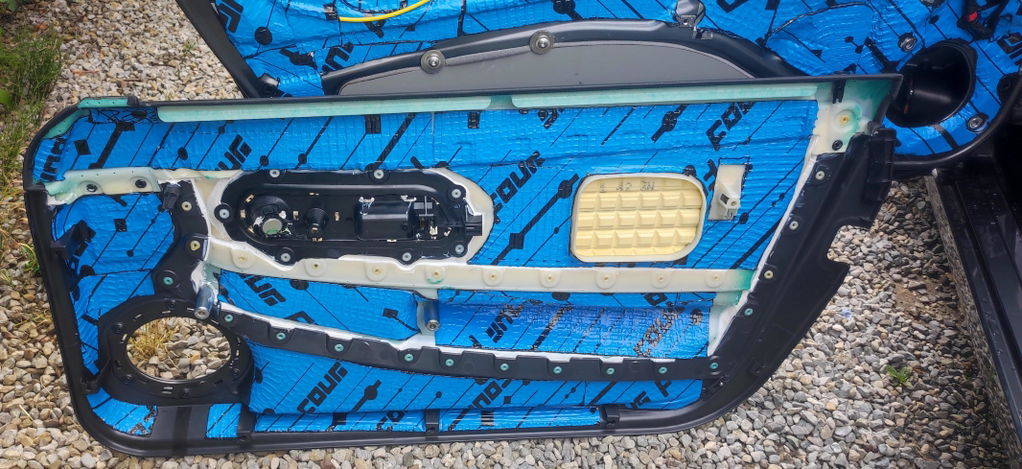
Die Materialien ließen sich gut verarbeiten. Für große Türen wenn man vollflächig arbeiten will reicht eine Packung nicht. Die Alufolie zum Löcher abdecken klebt nicht so doll wie das Alubutyl und die Schaummatten. Für Normalanwender ausreichend, die nicht wie ich zur Übertreibung neigen :). Das Zeug stinkt nicht und ich kann es somit empfehlen.
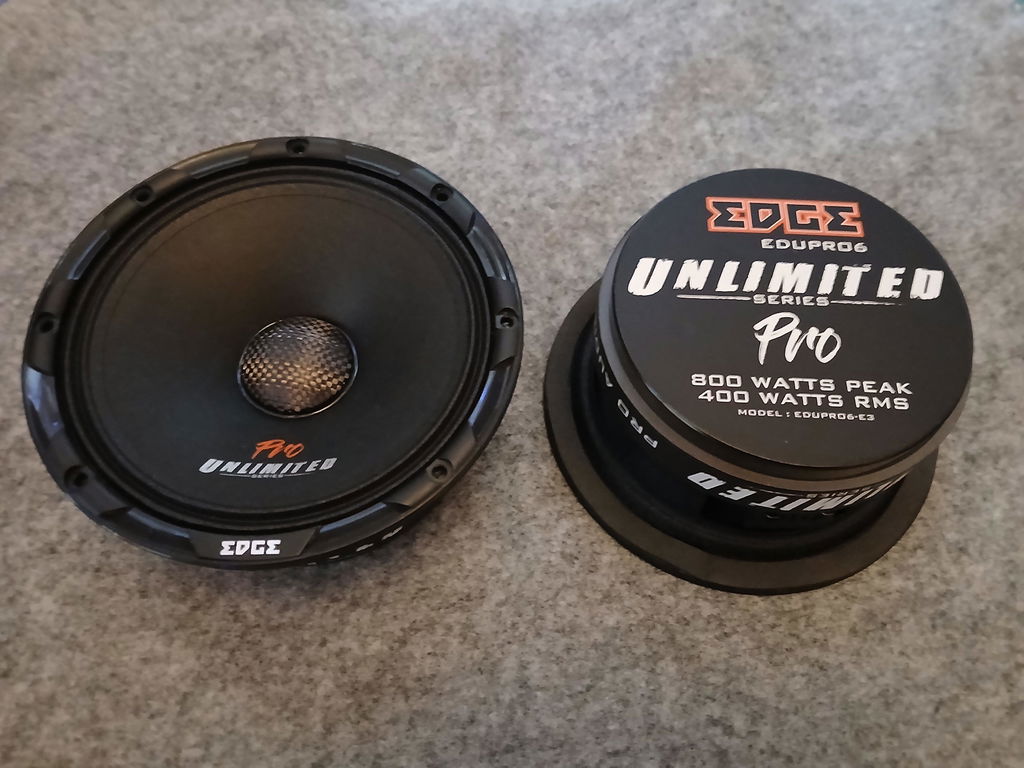
Lujaa soiva keskiääni 👍 VW golf mk3.
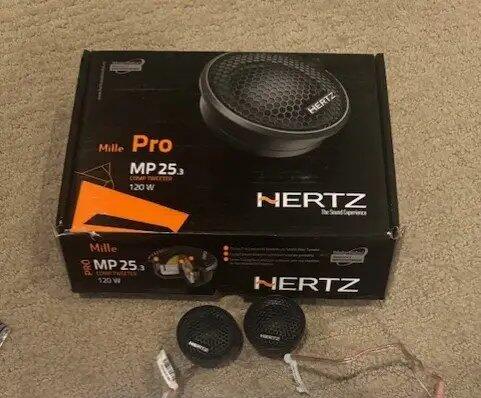
The product is excellent quality!
The logistics are just awful.
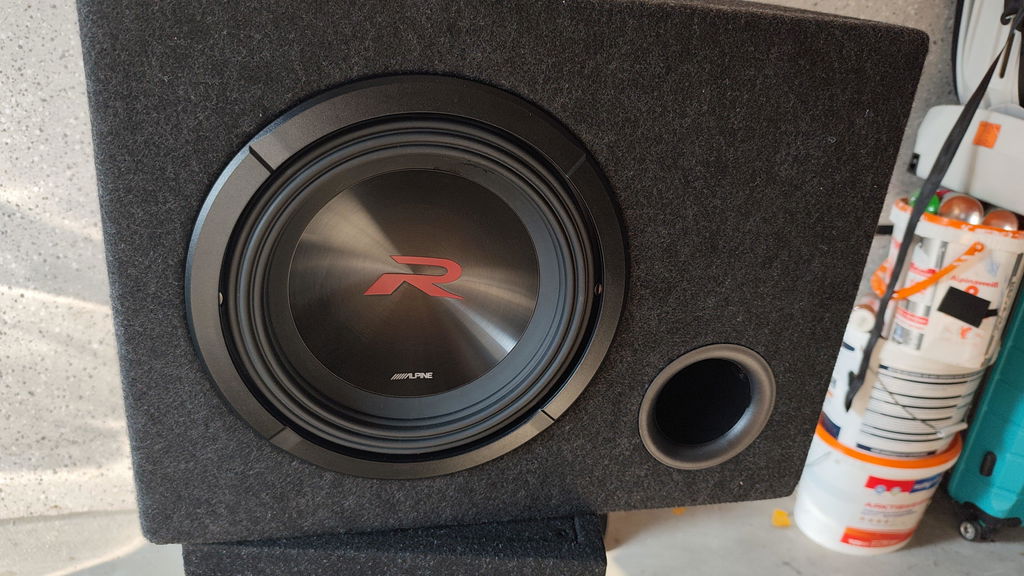
Megga geile Kiste ,war genau die richtige Entscheidung für meinen Subwoofer.
Immer tun empfehlen!
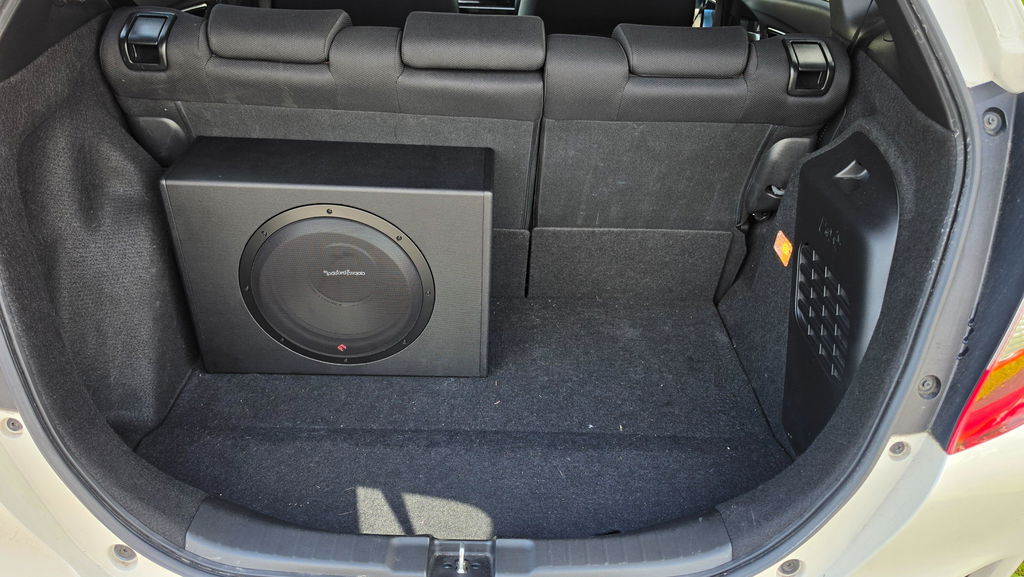
Great sounding sub nice puntch clean deep bass
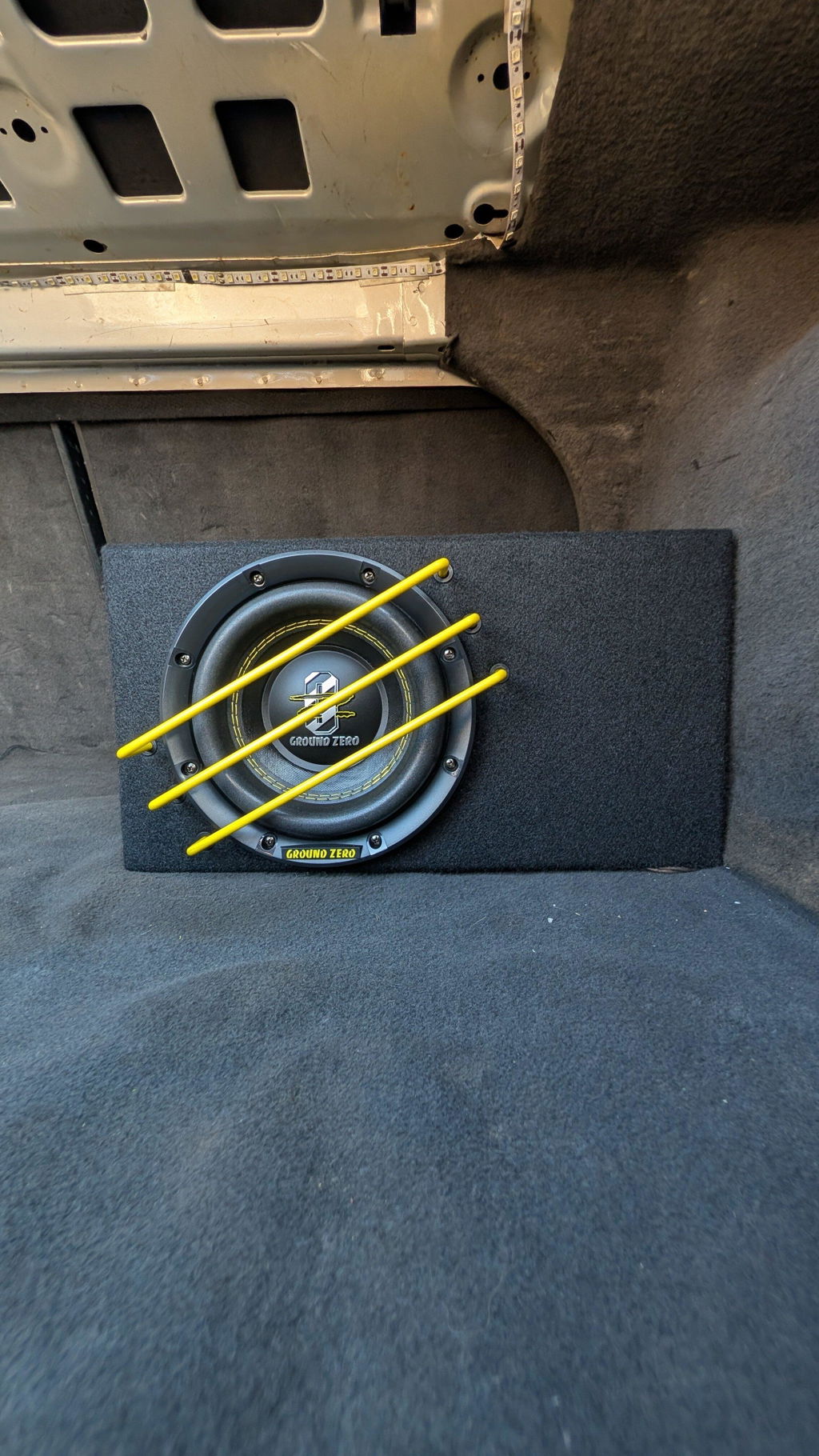
This subwoofer is exactly what I needed. It takes up very little room, which helped me immensely to keep my trunk space free for daily use. But the most surprising part is the sound. For its small size, it plays like a giant! Highly recommend it if you want strong bass in a small package